The Electric Rise and Fall of Nikola Tesla
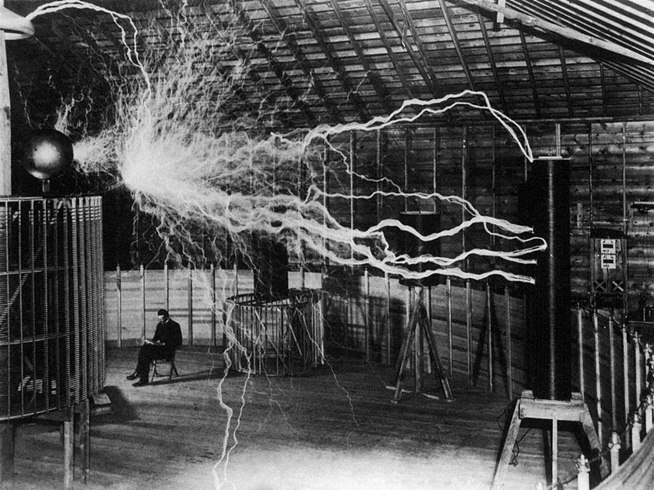
Marco Tempest is a magician who in
this instance, uses an amazing set of illusions and interactions with them to
tell the story of Nikola Tesla. He outlined the number of patents and
inventions that he had to his name (over 700!), such as radio, wireless
telegraphy, remote control, robotics, and even x-ray tech. He does note,
however, that after such great success, it didn't last. Tesla had an image for
the world that he was inspired to create, where the poor were not humiliated by
the rich and where people thought of the future and the next steps possible for
science and humanity. I think that this was the most profound point of
Tempest's story.
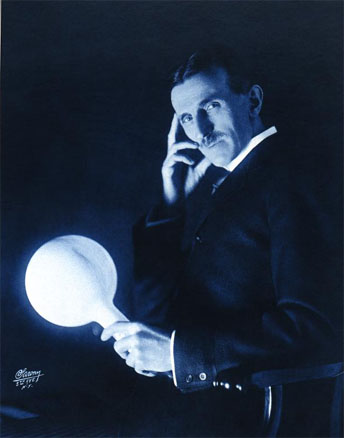 The story begins with his birth and
then moves to his astounding brain power, outlining not only how incredibly
intelligent Tesla was, but how he was able to construct his ideas and
inventions inside his mind, what Tempest says could have been a form of
synesthesia. He then connected the story of Nikola Tesla to himself, telling an
interjected story about how Tesla became a showman to show the public that the
volts he would need to pursue his idea of the alternating current were safe,
praising the magic of science.
The story begins with his birth and
then moves to his astounding brain power, outlining not only how incredibly
intelligent Tesla was, but how he was able to construct his ideas and
inventions inside his mind, what Tempest says could have been a form of
synesthesia. He then connected the story of Nikola Tesla to himself, telling an
interjected story about how Tesla became a showman to show the public that the
volts he would need to pursue his idea of the alternating current were safe,
praising the magic of science.
Tempest creates an illusion to
illustrate the life of Tesla and the ideas he's presenting, even taking of the
persona of Tesla at points, making him speak directly to the audience. This
creates a more personal connection with the audience which helps them to
empathize with him as a person, not just an out of reach part of history. When
discussing his grand ideas, inventions, and aspirations he uses rising,
inspirational music and speaks excitedly, wrapping the audience up into the
feeling. He's attempting to make the audience be excited as well and understand
just how great Tesla was. However, when it begins to look into how Tesla's
career began to fall a bit, his ideas were discarded and finally died with the
amazing ideas he had lost forever, the music was sadder, and there was more
dejected injections from Tesla's character, and he speaks about the great loss
of knowledge and image the world suffered with his dismissal. Here Tempest is
trying to make them see Tesla as he does and feel the same loss.
Tempest is an illusionist, and
while many would consider what he does a hoax or just generally believe him to
be unreliable, he shares that trait in common with Tesla. He uses that common
outlet to connect with Tesla, and finds him an inspiration worth sharing. He
uses a lot of quotes of Tesla's and isn't really portraying much of an opinion
most of the presentation. He also, if you think about it, has no reason
what-so-ever to lie. He wants to portray as much information about Tesla as he
possibly can, and for that I think that he is a credible source. While he may
not be the traditional scholar we've learned to trust, what he does, how he has
researched, and his own expertise makes him just as valuable a source as any
other.
 While attempting to portray to the
audience how important Nikola Tesla was to our society today and how his ideas
should serve as inspiration for future development, Tempest describes the
genius of Tesla throughout his [this is where my blog deleted the next four
paragraphs, so it's gonna be nowhere near as brilliant as it was, sorry]
brilliant imagination, negating his need to make plans and prototypes and
instead build the finished product. He also described his over 700 patents, how
crucial his inventions where and are, and how they are still pertinent today.
Having the showmanship in common with Tesla and his personal connection and
enthusiasm for the subject does create some bias in that regard, but his
passion doesn't make it so that he's giving false or overly exaggerated
information, so his reasoning is still sound. His persuasiveness, the
presentation manner and the amount of evidence given is all strong and sound,
even when describing his downfall.
While attempting to portray to the
audience how important Nikola Tesla was to our society today and how his ideas
should serve as inspiration for future development, Tempest describes the
genius of Tesla throughout his [this is where my blog deleted the next four
paragraphs, so it's gonna be nowhere near as brilliant as it was, sorry]
brilliant imagination, negating his need to make plans and prototypes and
instead build the finished product. He also described his over 700 patents, how
crucial his inventions where and are, and how they are still pertinent today.
Having the showmanship in common with Tesla and his personal connection and
enthusiasm for the subject does create some bias in that regard, but his
passion doesn't make it so that he's giving false or overly exaggerated
information, so his reasoning is still sound. His persuasiveness, the
presentation manner and the amount of evidence given is all strong and sound,
even when describing his downfall.
Personally, this TED talk was
really interesting to me, not only because I found the content interesting, but
because I found the quotes provided by Tesla really inspirational. I chose this
talk because I thought that the points brought up were very important. I'm not
sure how to phrase it, but I think that the message the Tempest was trying to
convey was amazingly important for all manner of people to hear. I also
connected with this talk as an aspiring scientist, finding inspiration in his
ideals and what he was working for. I think that some of the story-telling used
in this talk relates to what we've begun to talk about in class concerning
identity. Tempest is an illusionist, that’s what connects him to Tesla.
Tesla used the illusion to make his science appear more appealing, giving it another
face essentially. He created another identity for the millions of volts he
needed in order to make it more acceptable for the public. In his shows, Tesla
also introduced a duality in his work, making it both science, hard facts,
tangible experimentation, as well as magic, intangible, fantastical, and
unfathomable. As Tesla put it, “the magic of science.”
[I had so many other ideas and it
was phrased more effectively before, the internet sucks.]
 The dedication and admiration that Tesla
had for his work and what he was working for, ("Everything I did, I did
for mankind") should be an inspiration, for if this man, so many years
ago, dreamed of a more equal future with its problems solved and science
working for the betterment of all could see it, we should too. Tesla and his
ideas and hard work are underrated. Tempest is trying to communicate how
important it is for us to expand upon Tesla’s ideas and ideals. I think he’s
hoping that at least the people in his audience will take something away from
his presentation and be inspired to think about the difference that they can
make.
The dedication and admiration that Tesla
had for his work and what he was working for, ("Everything I did, I did
for mankind") should be an inspiration, for if this man, so many years
ago, dreamed of a more equal future with its problems solved and science
working for the betterment of all could see it, we should too. Tesla and his
ideas and hard work are underrated. Tempest is trying to communicate how
important it is for us to expand upon Tesla’s ideas and ideals. I think he’s
hoping that at least the people in his audience will take something away from
his presentation and be inspired to think about the difference that they can
make.

